Monday, January 23, 2006

Sketch Assignment - Performative Furniture-Object


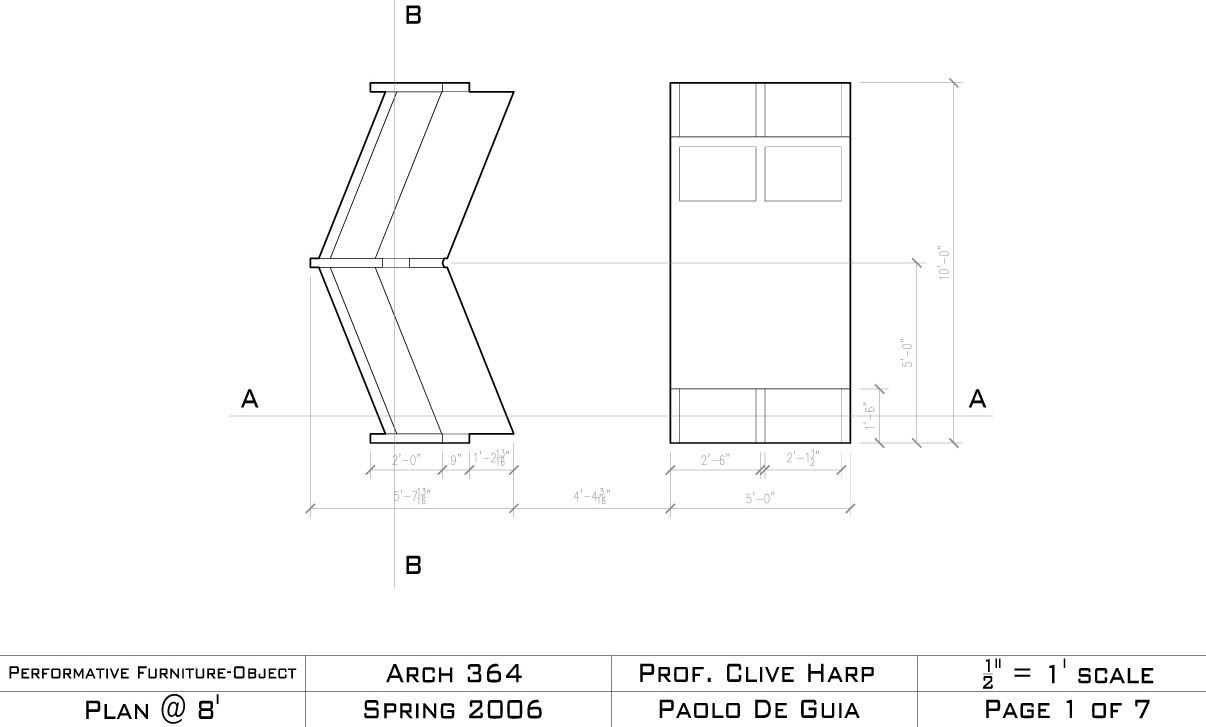
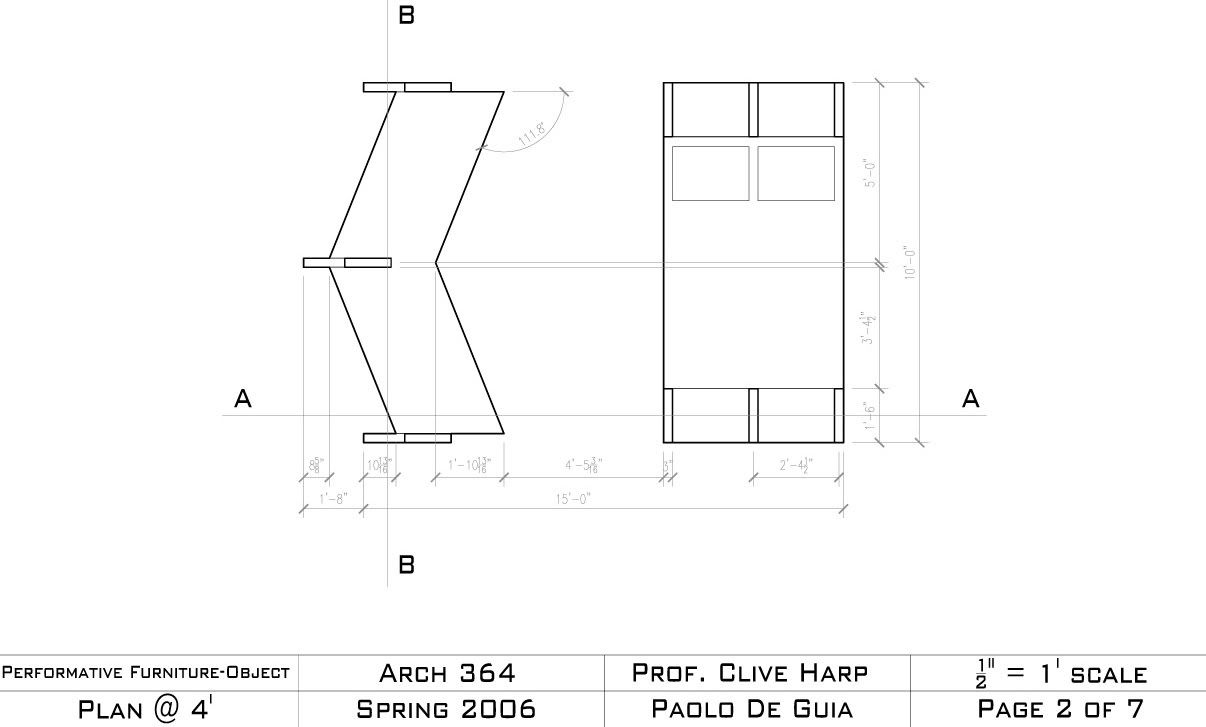
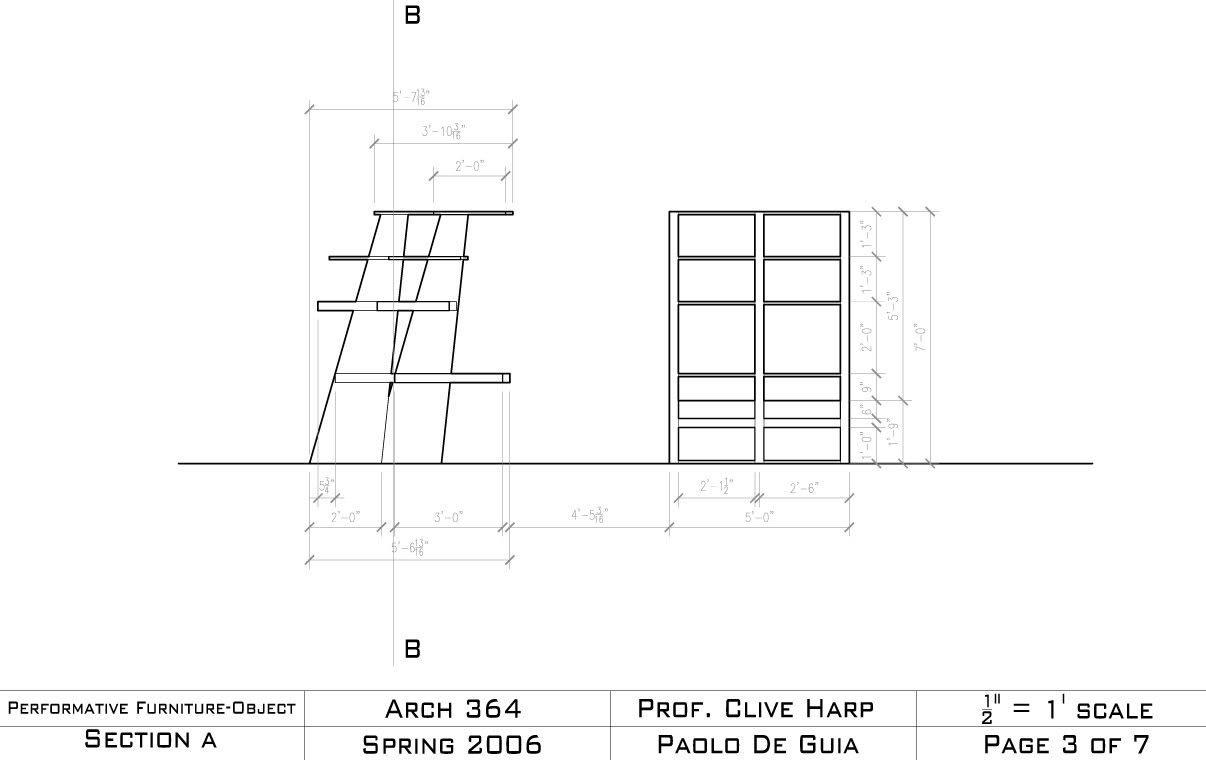
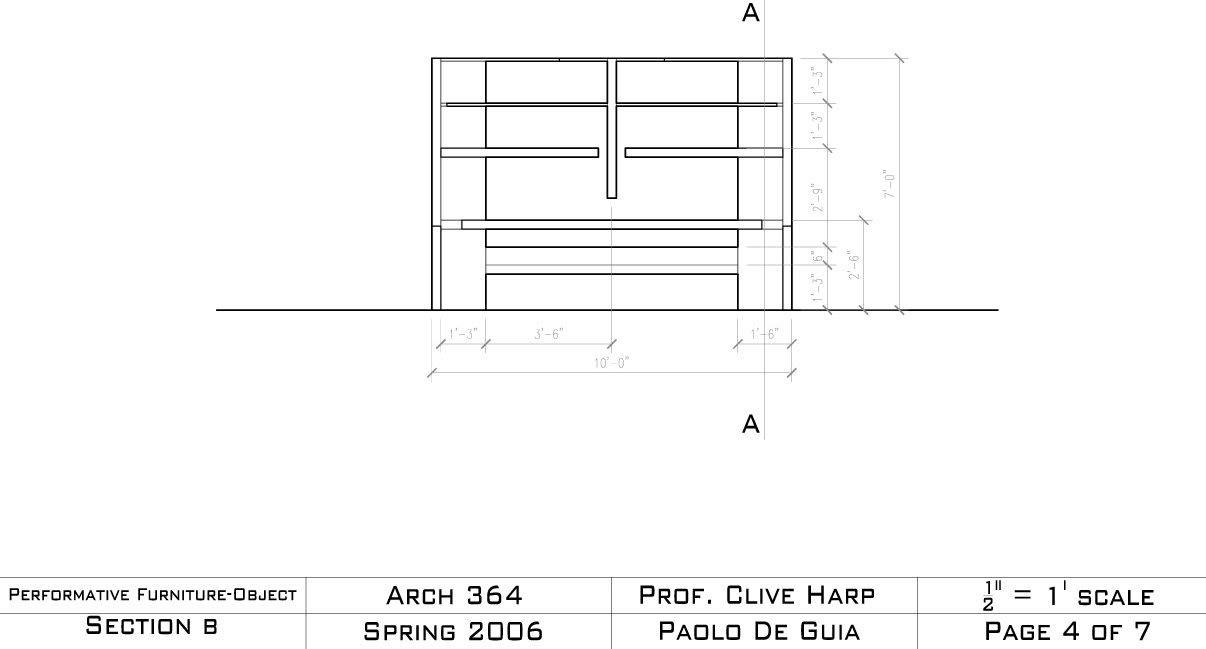
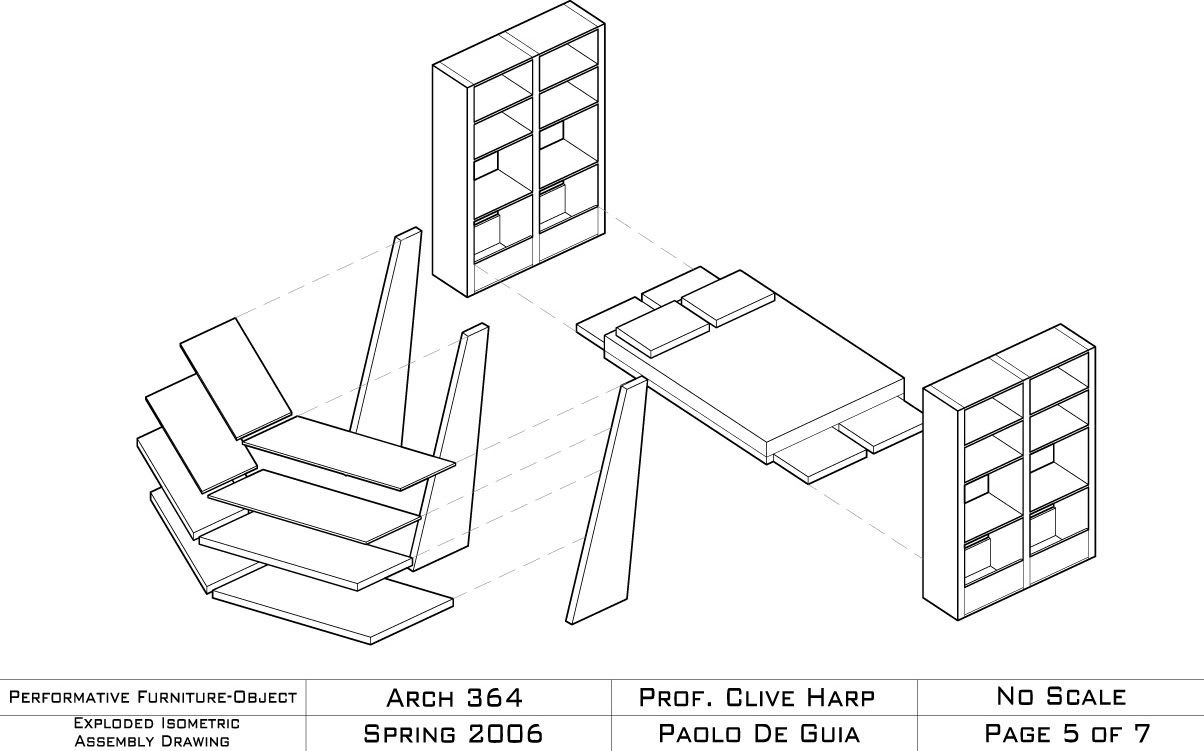
The design for my funiture-object came mainly from the programmatic requirements of the project: sleeping area for two, book stacks for a large collection, storage space, display space, work surface, sun shading device to the south-facing end, and solar collection device for the north-facing end; as well as designing a perfomatively functional object that would convey the client's interest in maritime-craft design and fabrication, which I attempted to adress.
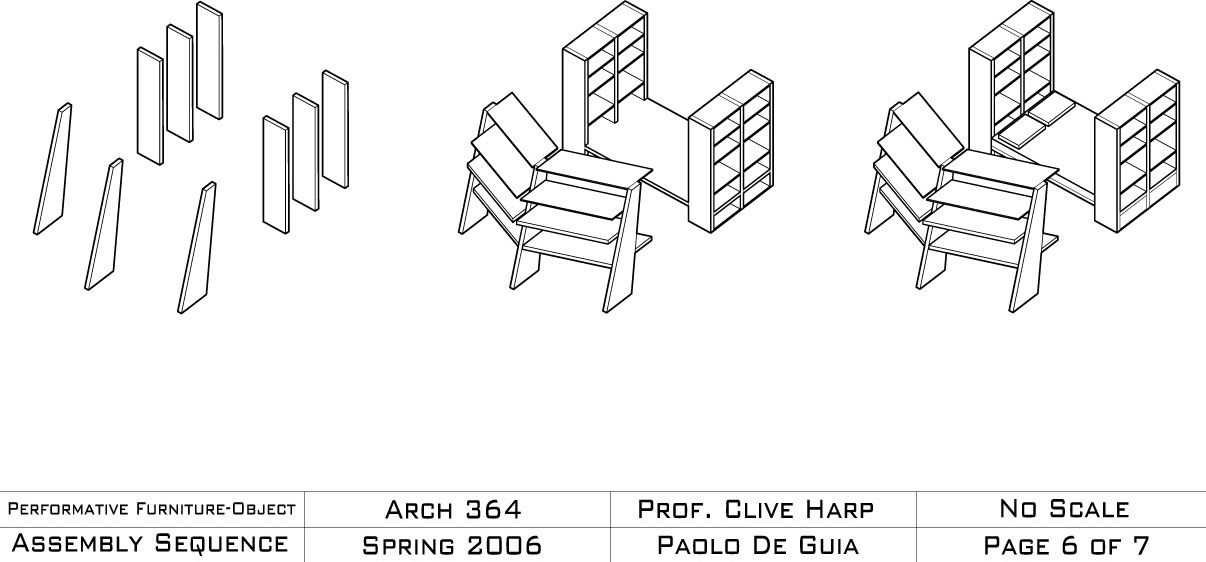
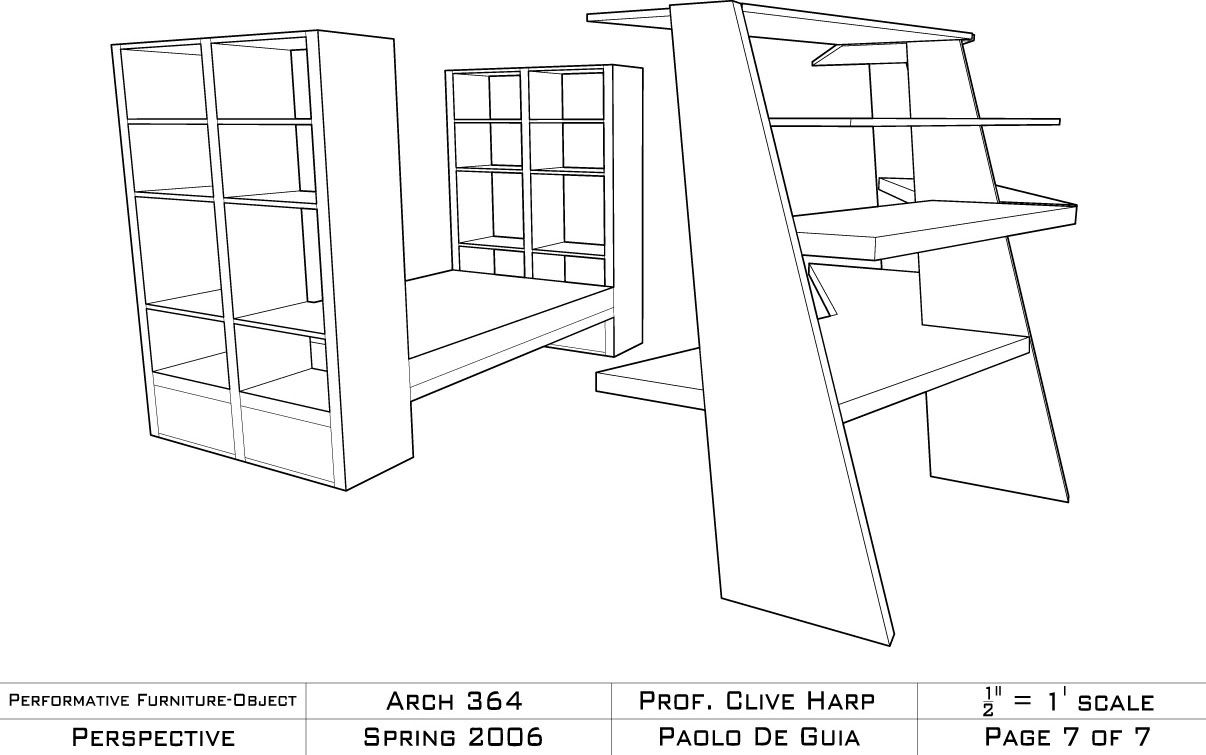
I first started off my design with the general form of most boats in mind and the reason as to why they are shaped like elongated pointed ovals. the design of a boat allows it to move well through water mainly in a forward direction with the help of wind going in the same general direction. In designing for my object-furniture, I created two seperate multi-functional objects. The south-facing object is made of 3 vertical elements designed to be able to be easily self supporting with just a single horizantal slab to help it. This object has 4 horizontal slabs: a worf surface, a display space, and 2 sun shading devices which help to shade the work space below but give indirect sunlight.
The north-facing object is simply a bed supported by bookselves on both ends made simply of 3 vertical elements and several horizontal slabs in which books are to be placed. At the bottom of the bookshelves, is an easily accesible storage space. The bed and bookshelves are oriented so as to prevent light from the north from being obstructed.


Wednesday, December 07, 2005

Final Review Presentation

Continuing with my ideas and intent from my site analysis, I further developed the ideas I presented for my midterm review.

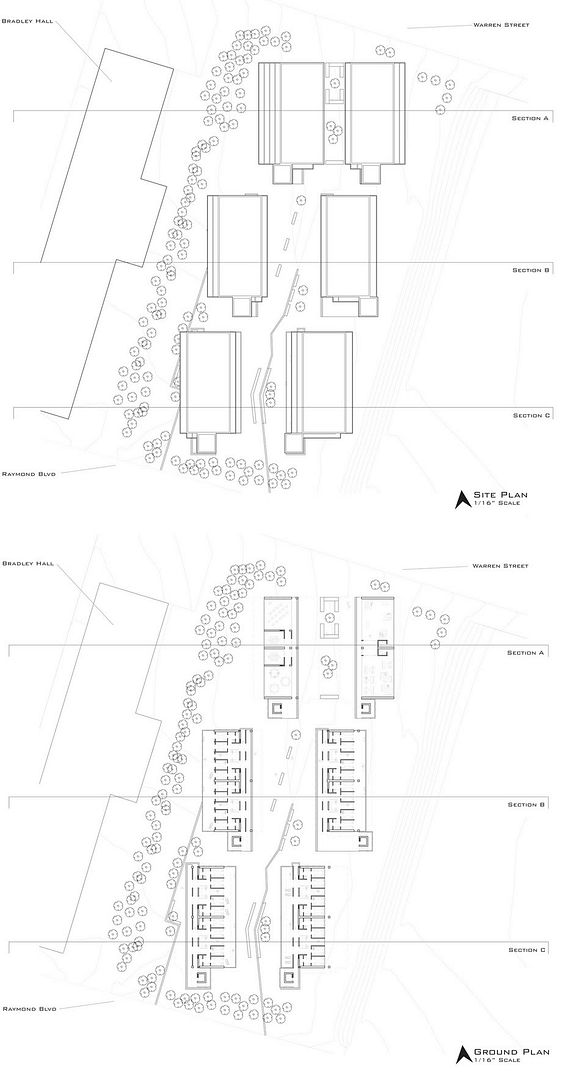
Working further on my ideas of maximizing public/private interaction, I broke my project down into 6 building structure, each paired into two. With this, I create 3 courtyards in between the buildings, each with its own characteristic. With these courtyards and balconies, I am trying to create different spaces and different moments and levels and types of interactions both spatially and socially.
Next to Warren Street is the entry to the site and the first pair of buildings. I have both buildings overhanging toward each other to make a gesture that as you move through this first pair of buildings and the courtyard, you are moving through the entry. I also have the views more directed towards the courtyard, the entry, and each other with the direction of the overhang.


On the second pair, I have the building overhanging eastward to take advatage of the views of the athletic field and downtown Newark as well as provide more space between Bradley Hall and the Dormitory.


On the last pair, the pair of buildings are looking away from each other and the courtyard to give the courtyard at the end of the site even more privacy and to take advantage of the views in both east and west directions.


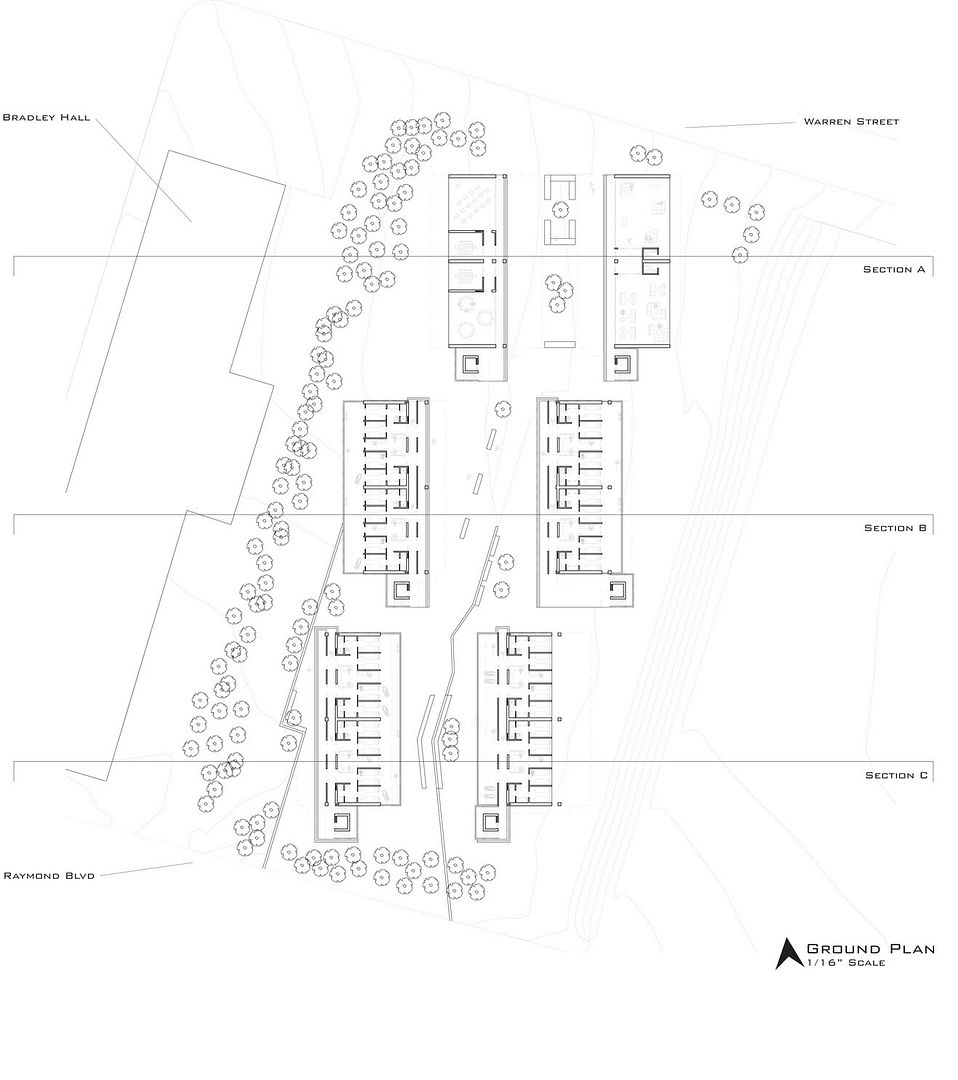
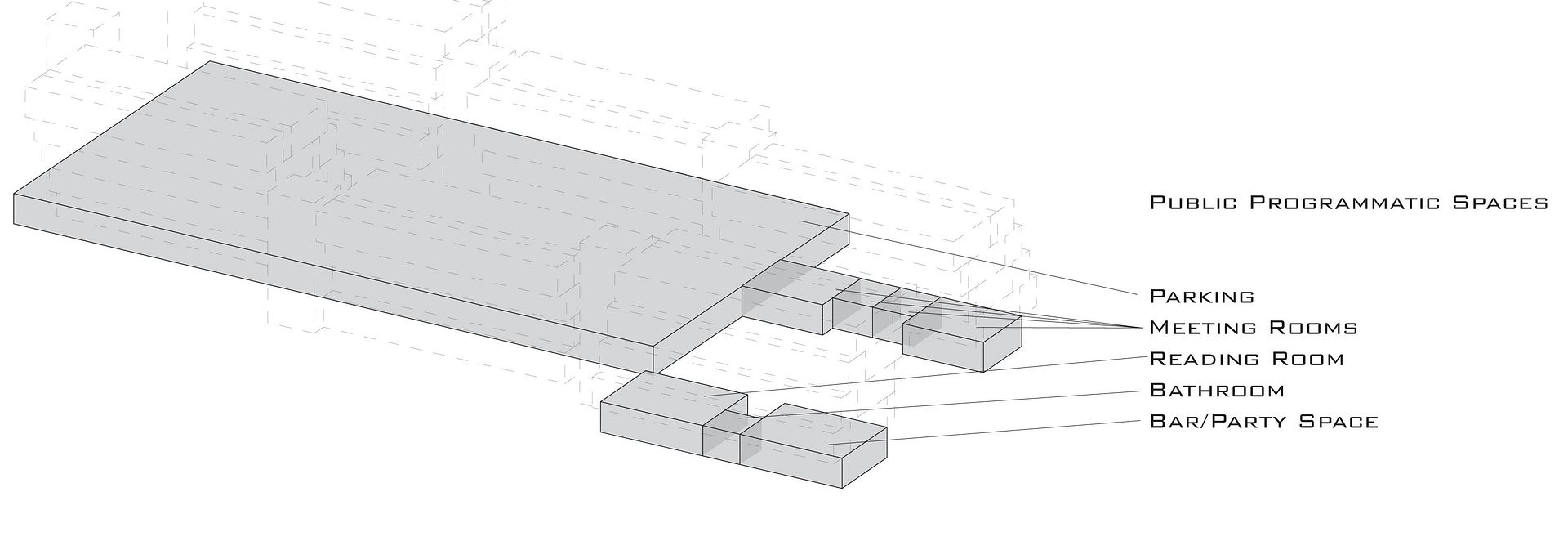
Here on the ground plan, I show how next to the Warren Street entry, I place the campus center with meeting rooms on the west side and reading room and bar/party space on the east side. By placing the campus center by the entry, I am essectially keeping the rest of the site more private by keeping the more public programmatic requirements and uses close to the public side of the site and leaving the rest of the site for more private use. I placed seatings in the first courtyard that create spaces for people to sit/stand and wait because i intend this courtyard as a busy space but still requiring some buffer from the heavy circulation for peopel to site and wait to meet their friends to and from the dormitory. The second courtyard is intended to be more of a passing space for people to circulate through and with seating designed to keep circualtion through this space free of obstructions. And the last courtyard is designed more as a destination spot, a place that one would not necessarily enter without wanting to be in this space. It is intended to be more private in terms of traffic for people to sit, relax, read, and talk. All the courtyards contain some trees for shading which is given space for growth in a stone ground treatment. In contrast to small amounts of trees in the courtyards is the 'forest' treatment of the landscape sorrounding the buildings and courtyards. This forest is comprised of the existing topography slope, clearings, and large numbers of trees in which students can be immersed in nature or have barbeques or simply read a book under a nice shade.

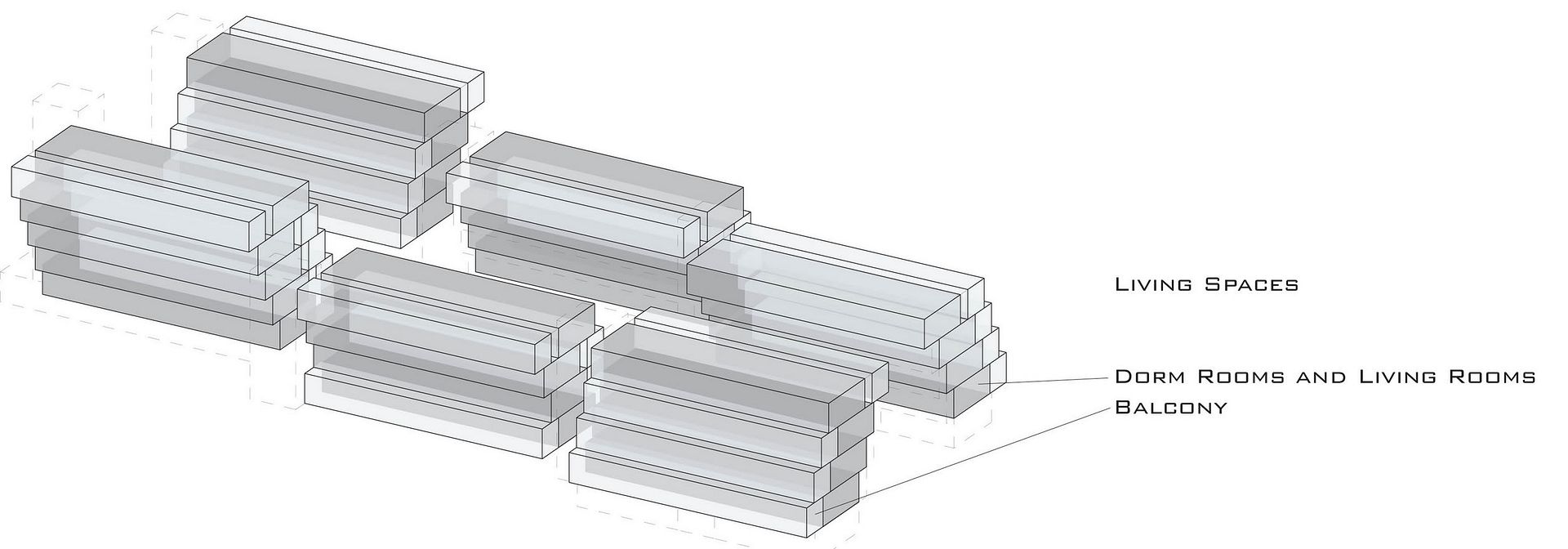
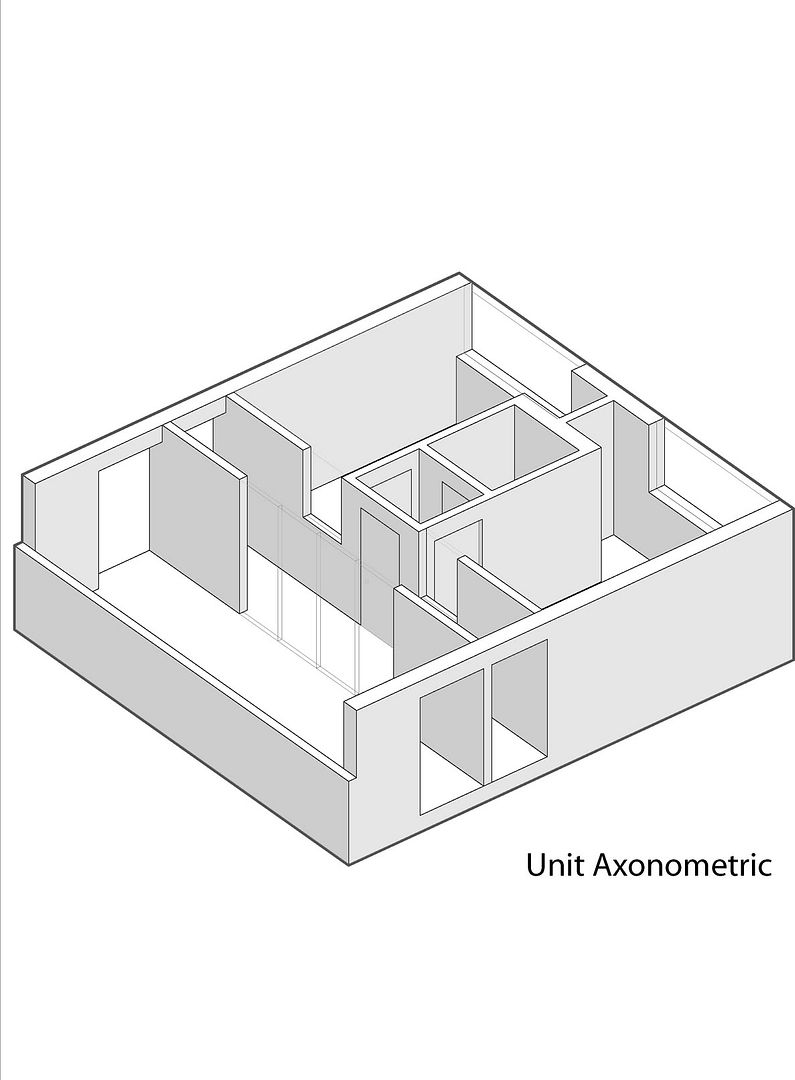
To keep this level of interaction between public and private spaces in a more micro scale, I designed two unit plans. Each unit contains 4 rooms, two bathrooms, and a large shared living space. Both types have sliding doors and partitions to control levels of privacy. With the shared space, the wall partitions are fully operable to allow more free circulation from the hallway, eassentially connecting the shared living spaces of two units. This creates different levels of community: 2 roomates per bedroom, 8 suitemates per unit, 16 floormates of two units combining to make a floor, neighbors that live on the same building, and neighbors of paired buildings. In the first unit plan, the interior circulation is connected to the living space which is connected to the balcony. This allows residents to have direct access from the shared living space and bedrooms into the balcony. In the second unit plan, the blacony is separated from the living space with the interior circulation in between, giving more privacy to the bedrooms and allowing for direct views onto the exterior from the bedrooms and living space.


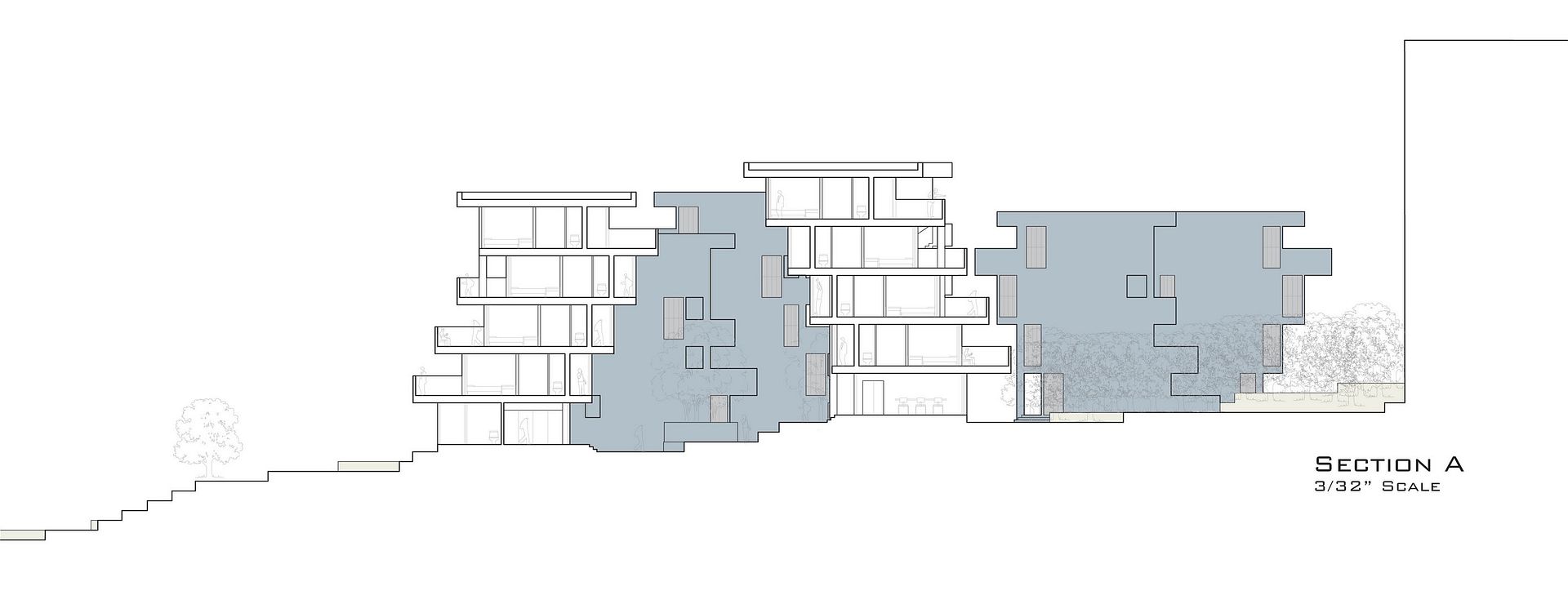
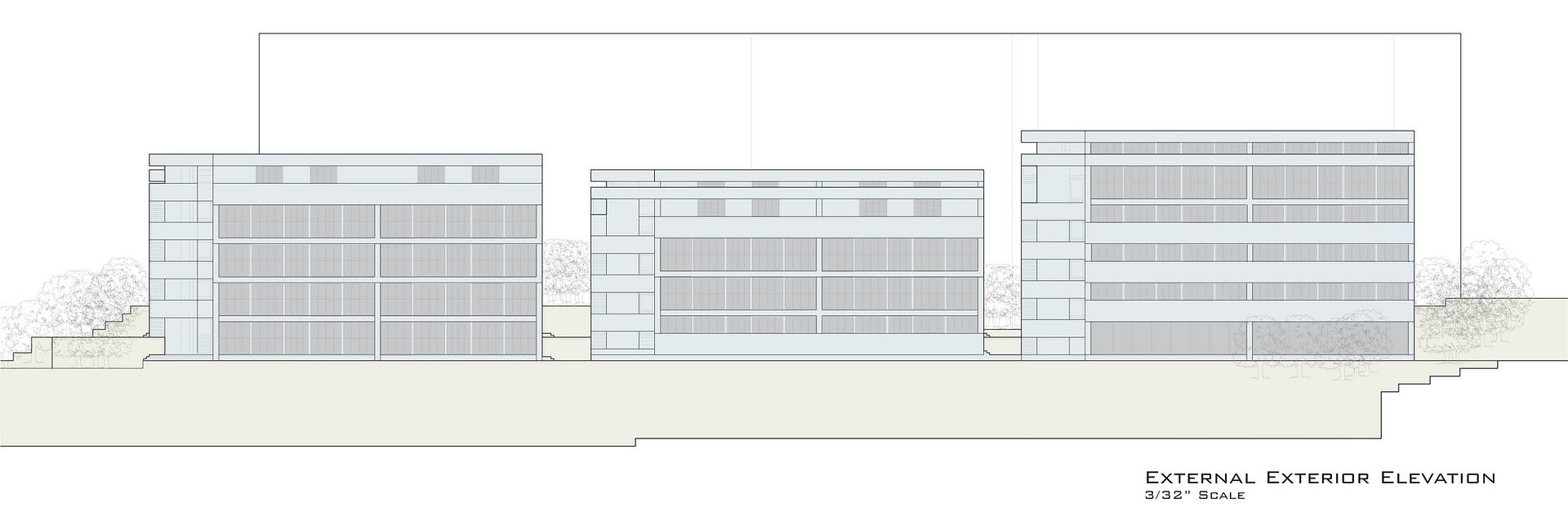
This is an elevation from Warren Street, expressing the overhang of the buildings as well as the slope of the site.


This is an elevation from the athletic field showing the main facade treatment and the vertical circulation on one side of each building.


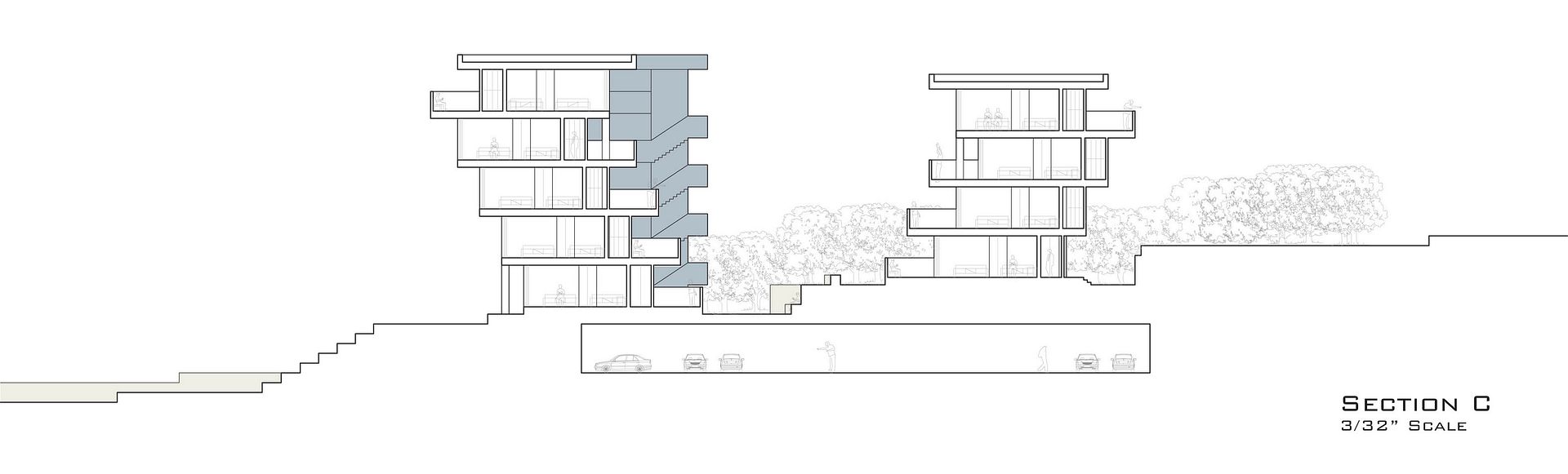
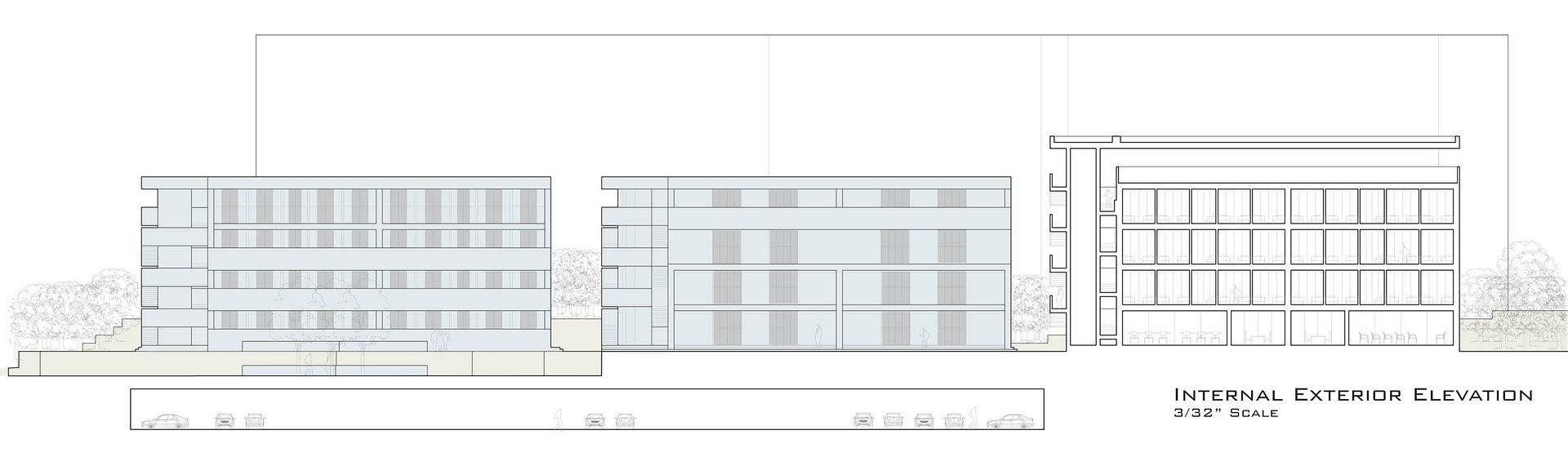
This is an elevation/section of the west side buildings' facade taken from the courtyards.


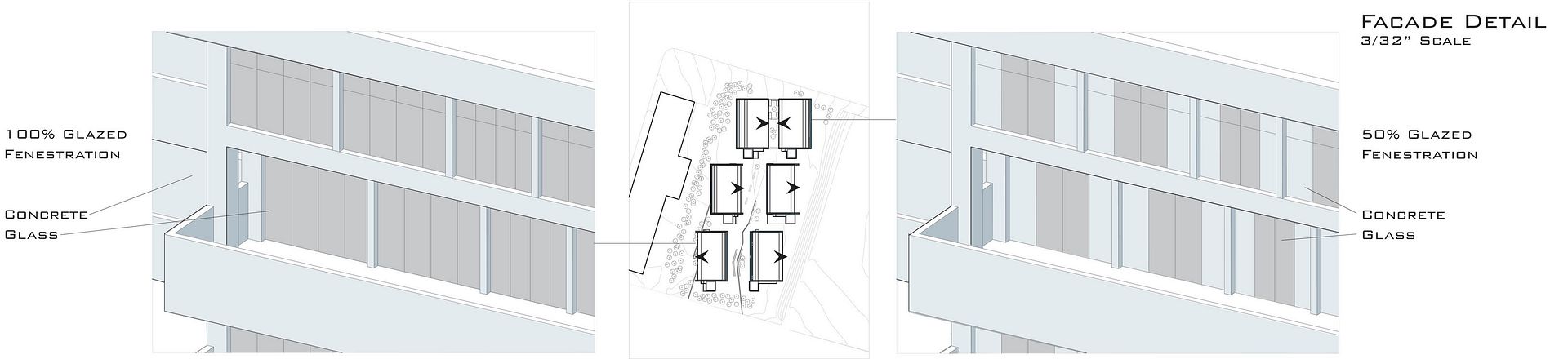
To follow my idea of controlling views to control levels of privacy, on some fenestration, I used 50% glazing and 50% concrete on the sides of buildings that were meant to be more private, as opposed to full glazing on the sides that are meant to be more publcic. On fenestration next to balconies, the fenestrations are fully operable while on fenestrations that are not connected to balconies, only the top portion are operable.


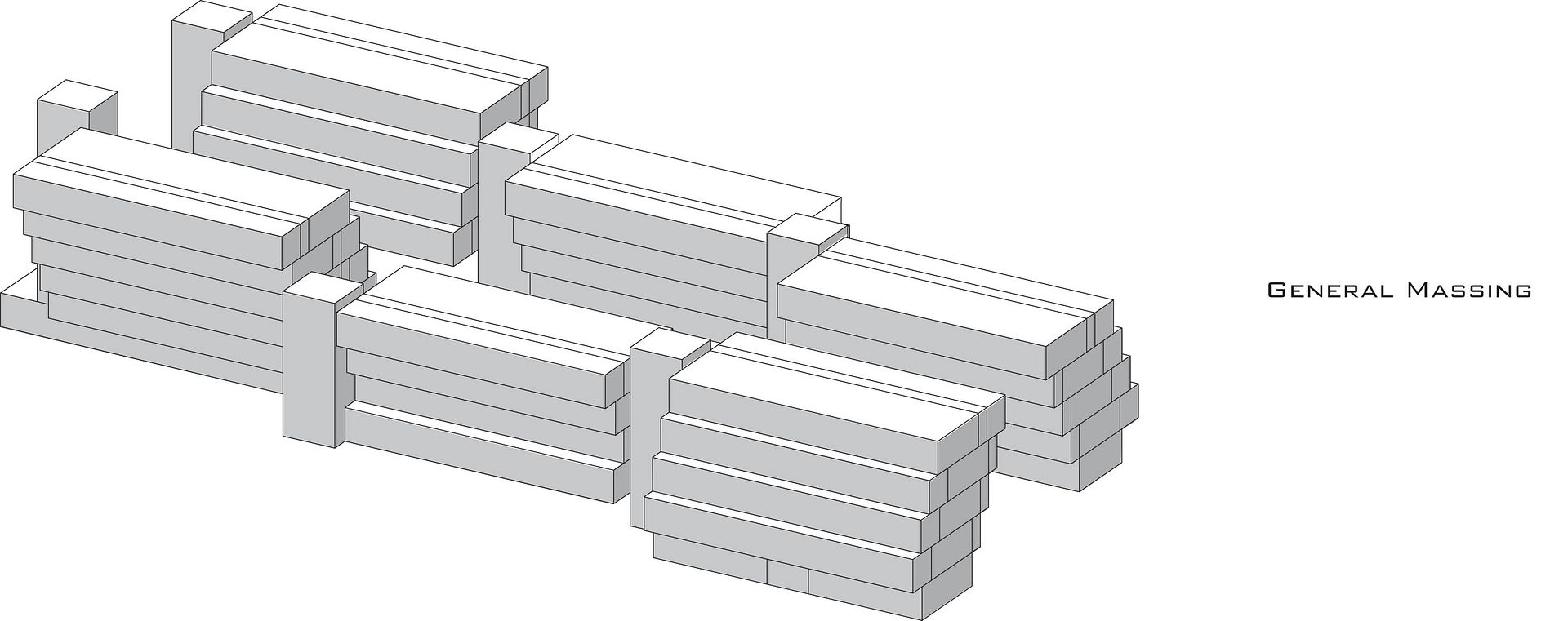
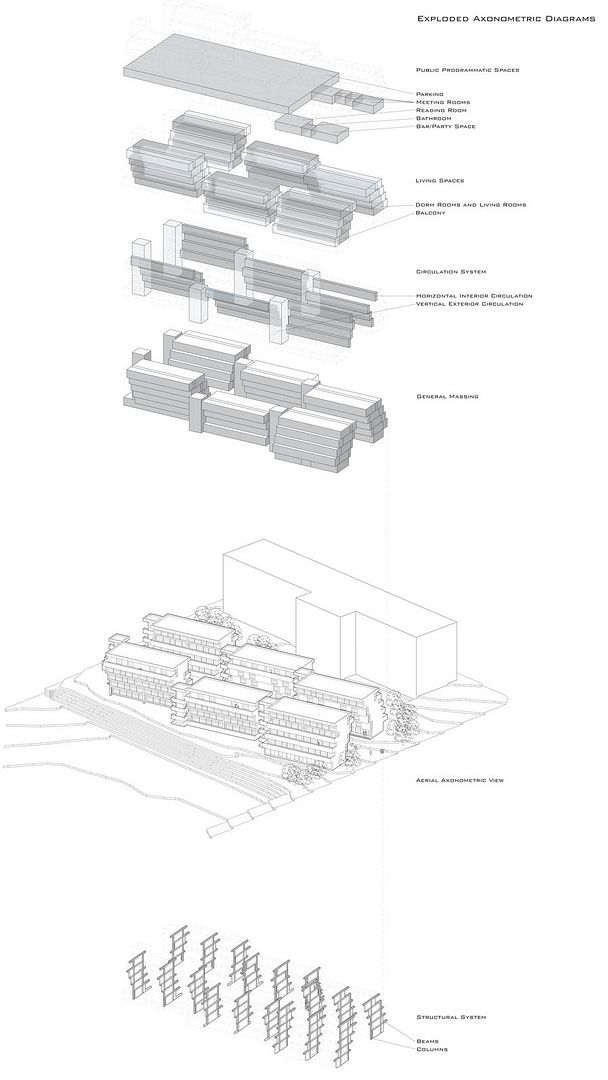
This is a general massing of my buidlings


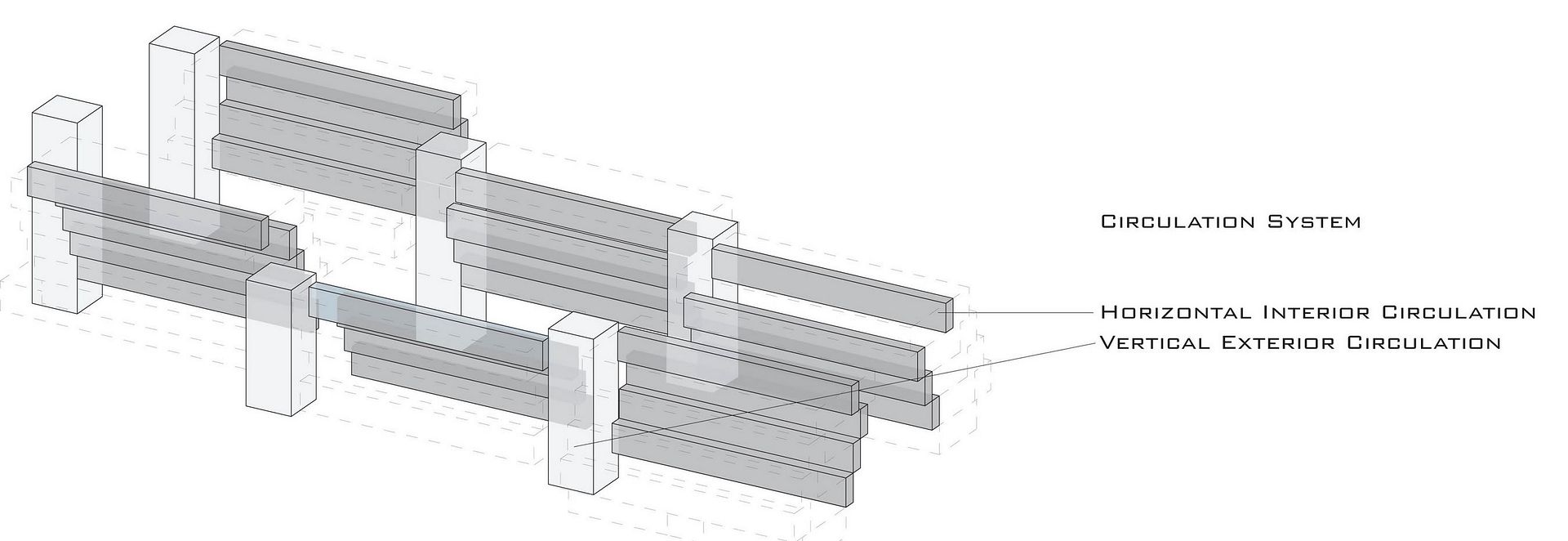
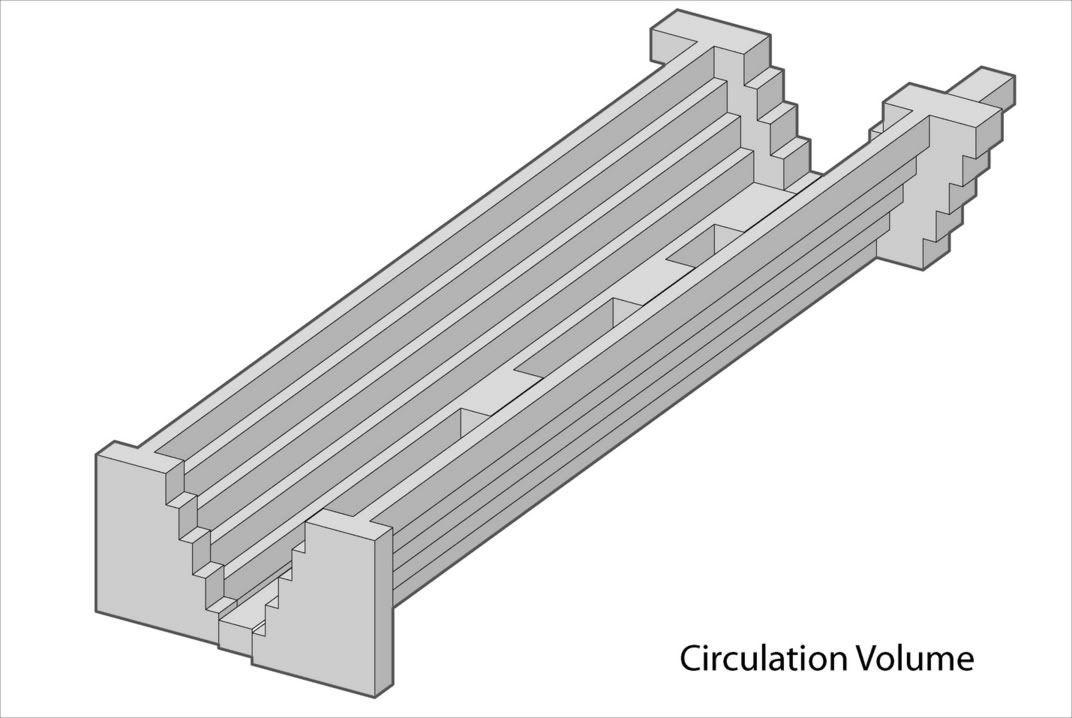
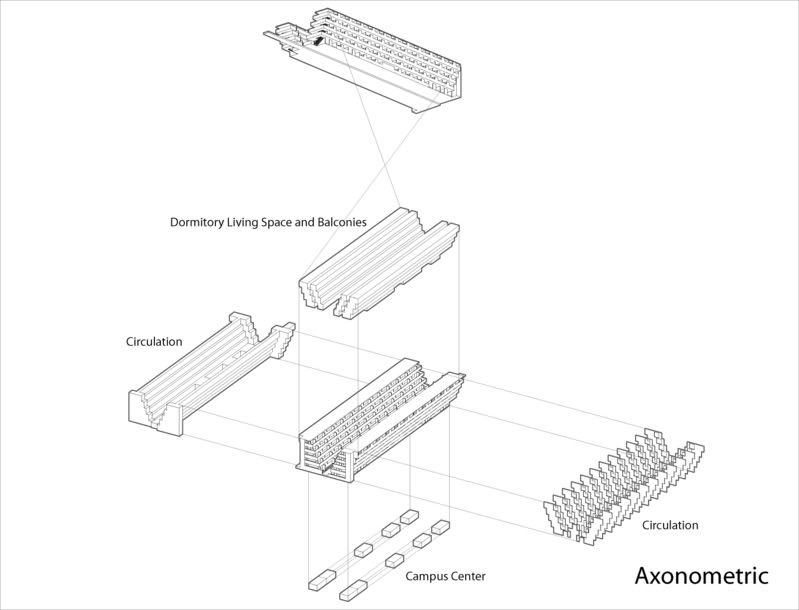
This axonometric diagram shows the interior horizontal circulation and the exterior vertical circulation. It also shows how the arrangement and location of the circulation change with the direction of the buildings and its relation to the balconies and living spaces.


This axonometric diagram shows how the balconies and living spaces are ordered and arranged in each floor and building.


This shows the general parking lot size and the arrangement of the campus center.


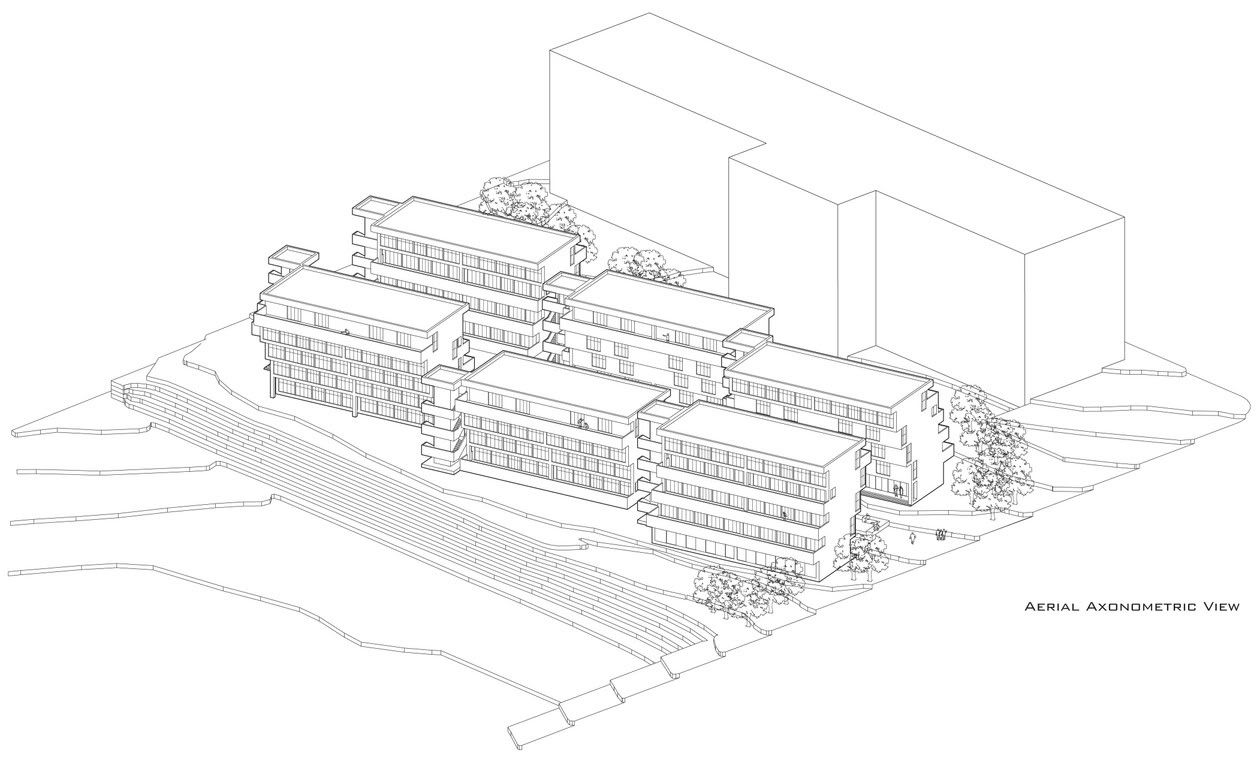
This is an aerial axonometric view of how the project would look like.


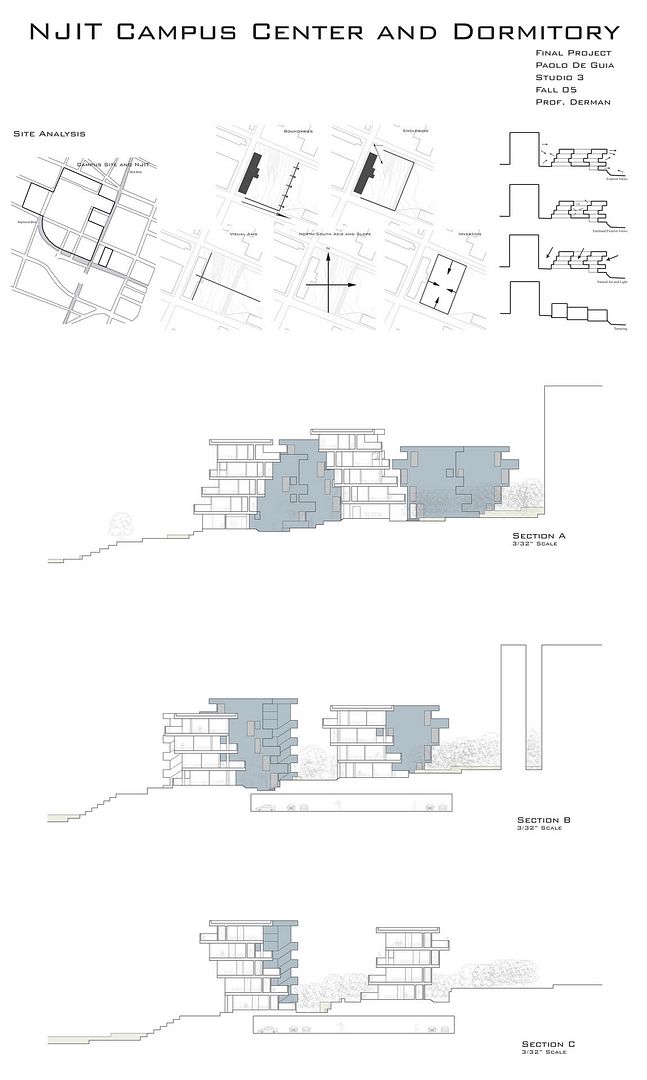
These are the layouts for my final presentation in order of my explantion.


Wednesday, November 09, 2005

Mid-Review Presentation

We started the Dormitory and Campus Center Project with the Site Study.

With the site analysis, I came up with several understandings of the site.


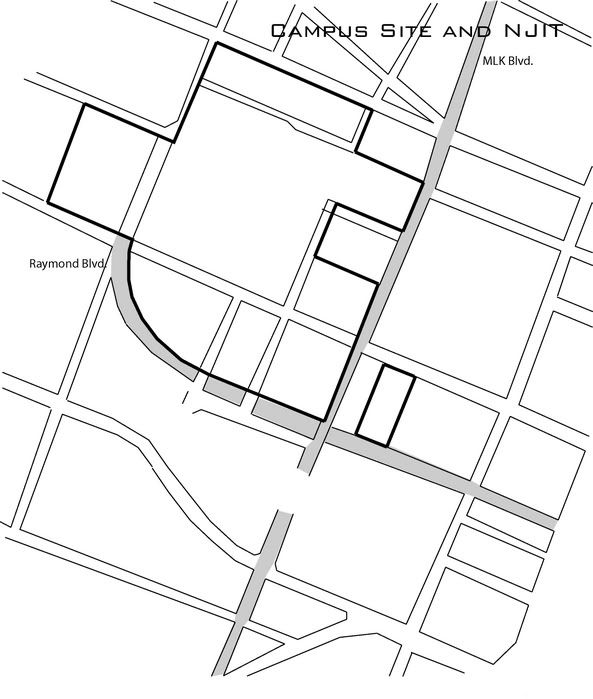
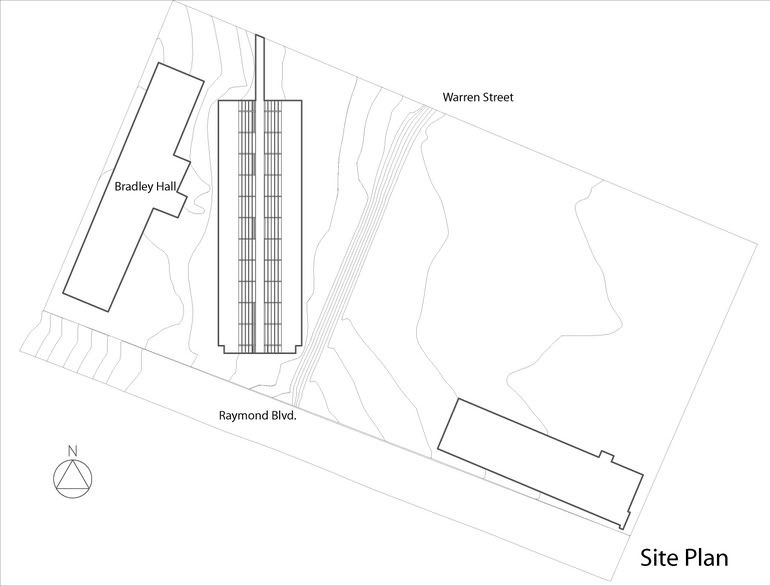
The site as I understood it, in relation to NJIT, is physically separate from the main campus. It is like an 'island' separated by the major roads - MLK Boulevard and Raymond Boulevard.


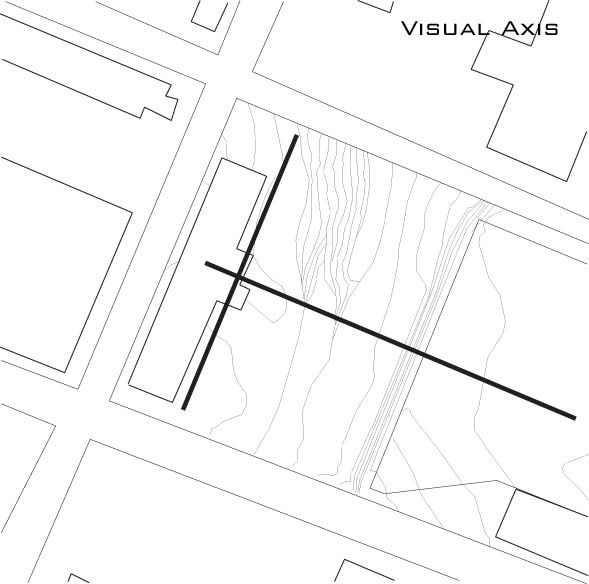
I also noticed that because of the close proximity to Bradley Hall to the site, as well as the large open space in front of it, along with the site's relation to downtown Newark, there is a very strong visual axis towards the East-Southeast.


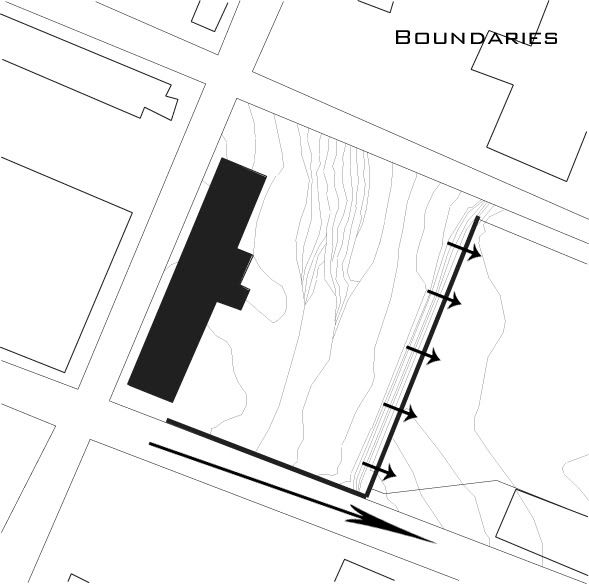
The site is also bound on three of its four sides, with Bradley Hall towards MLK Blvd. and the difference in elevation created by the hill it sits on, creating a steep elevation difference to the south and a sharp hill separating the athletic field from the site.


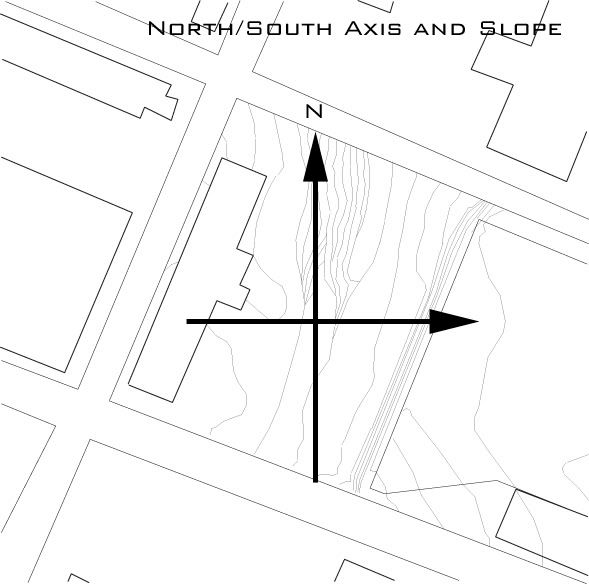
In this diagram, I complare it the the North-South Axis and acknowledge the slope as generally going directly to the east.

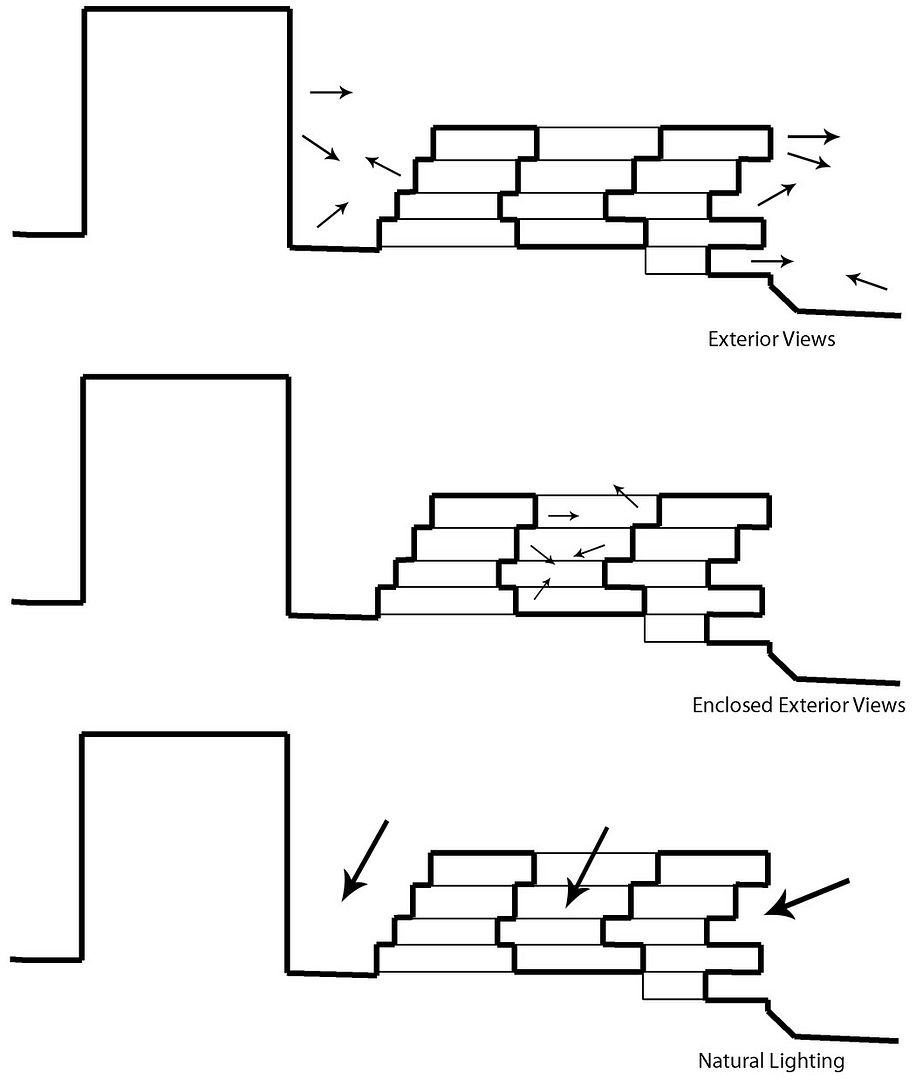
In response to these conditions that I analyzed from the site, I created 3 main ideas on how I respond to the site in realation to my larger idea of creating an atrium-like space that maximizes public/private interaction.


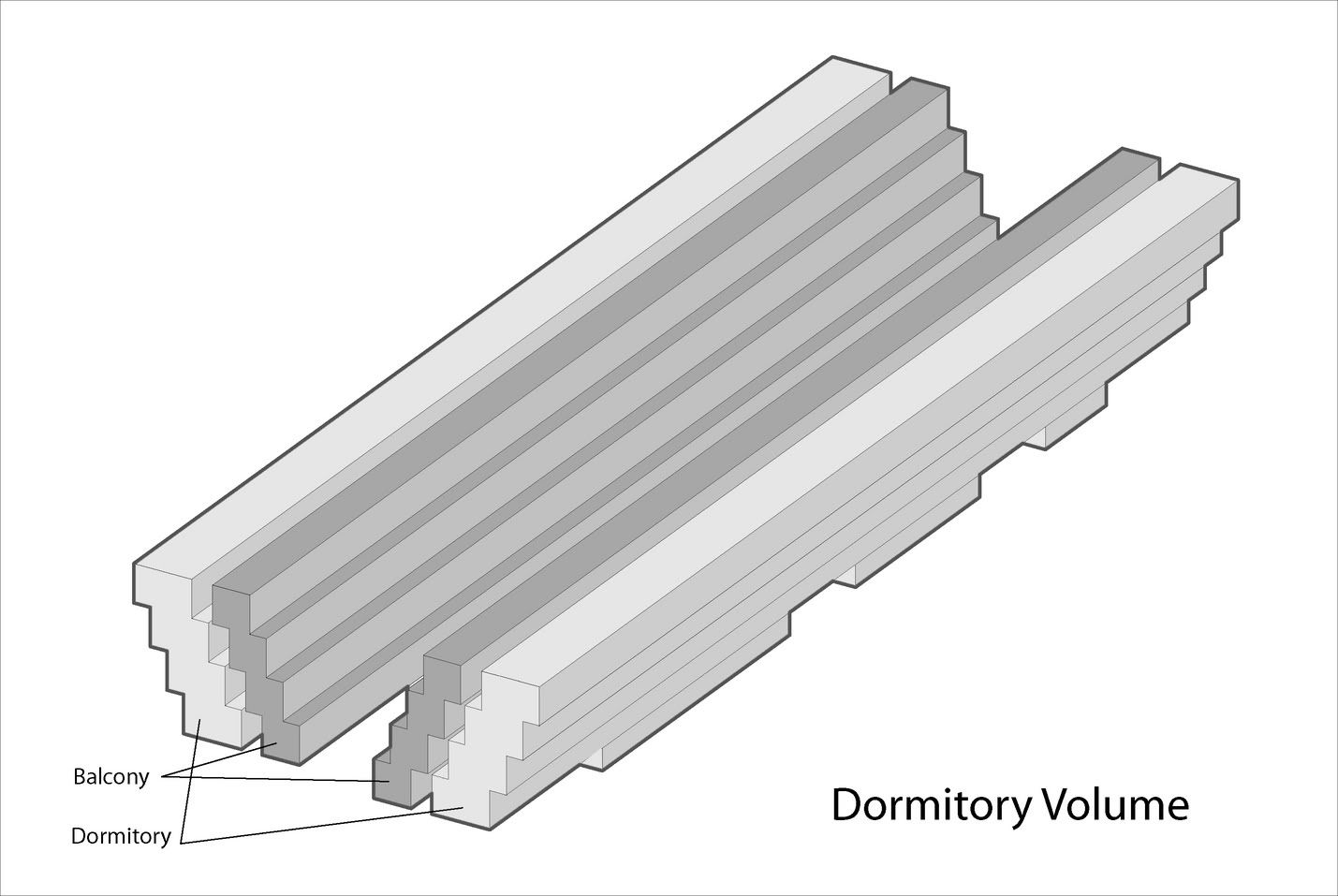
With this diagram, I introduce how my idea of public/private interaction and atrium is to manifest. By having each level overhang in different directions, I create conditions which take advantace of the site's views, the chance to create exterior balconies from which one can view into the 'atrium' and interact with events in the space between the two structures. The atrium would also allow natural lighting and ventilation from two sides in each room. It also compensates for the space that it created between Bradley Hall and the Dormitory/Campus Center. By overhanging away from Bradley Hall, balconies are created which Bradley Hall can view into as well as allowing more light and space to be between Bradley Hall and the Dormitory.


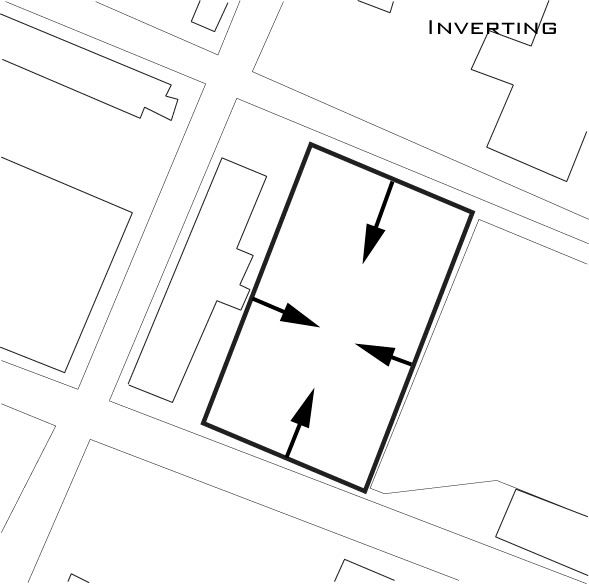
In reaction to the site being separated from the main campus, I plan on inverting programmatically to embrace and enhance the idea of the site being physically more separated from the rest of NJIT than other NJIT structures.


The site is to be enclosed with vegetation and raised land on the Warren Street side in order to support the idea of inverting the site.


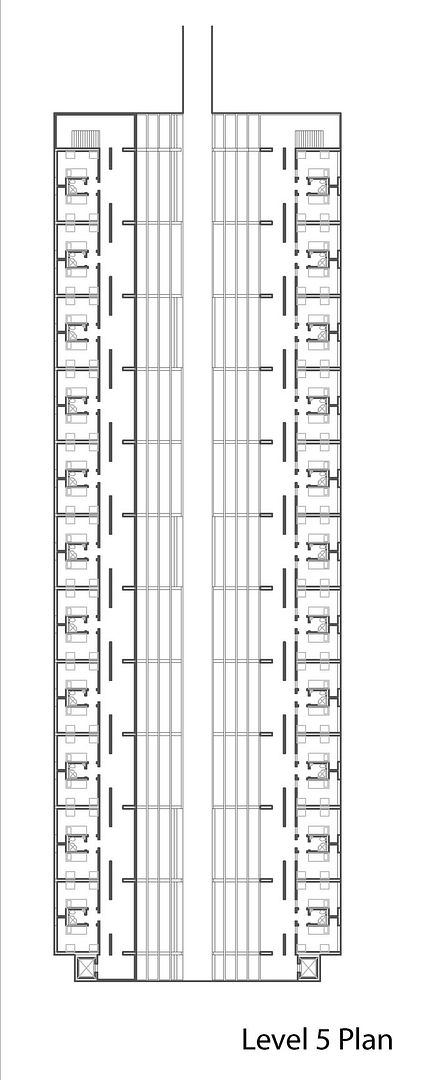
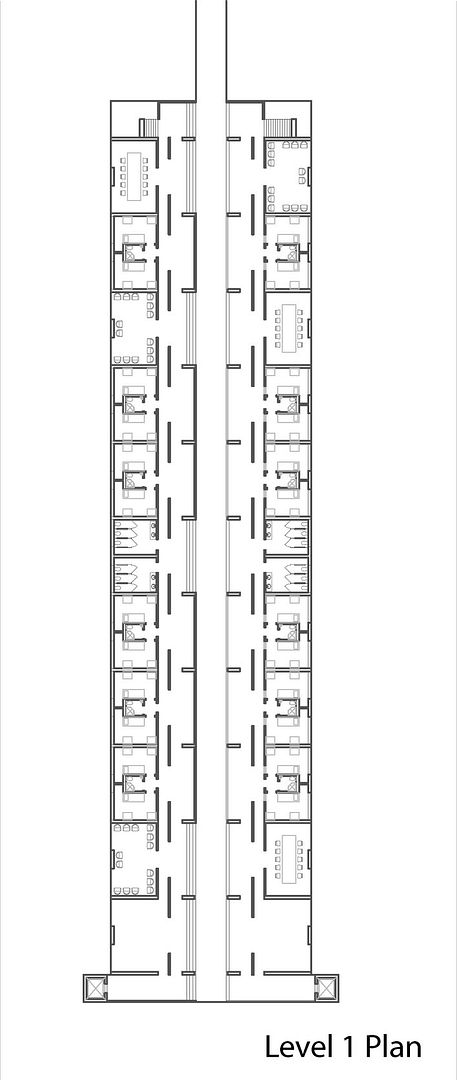
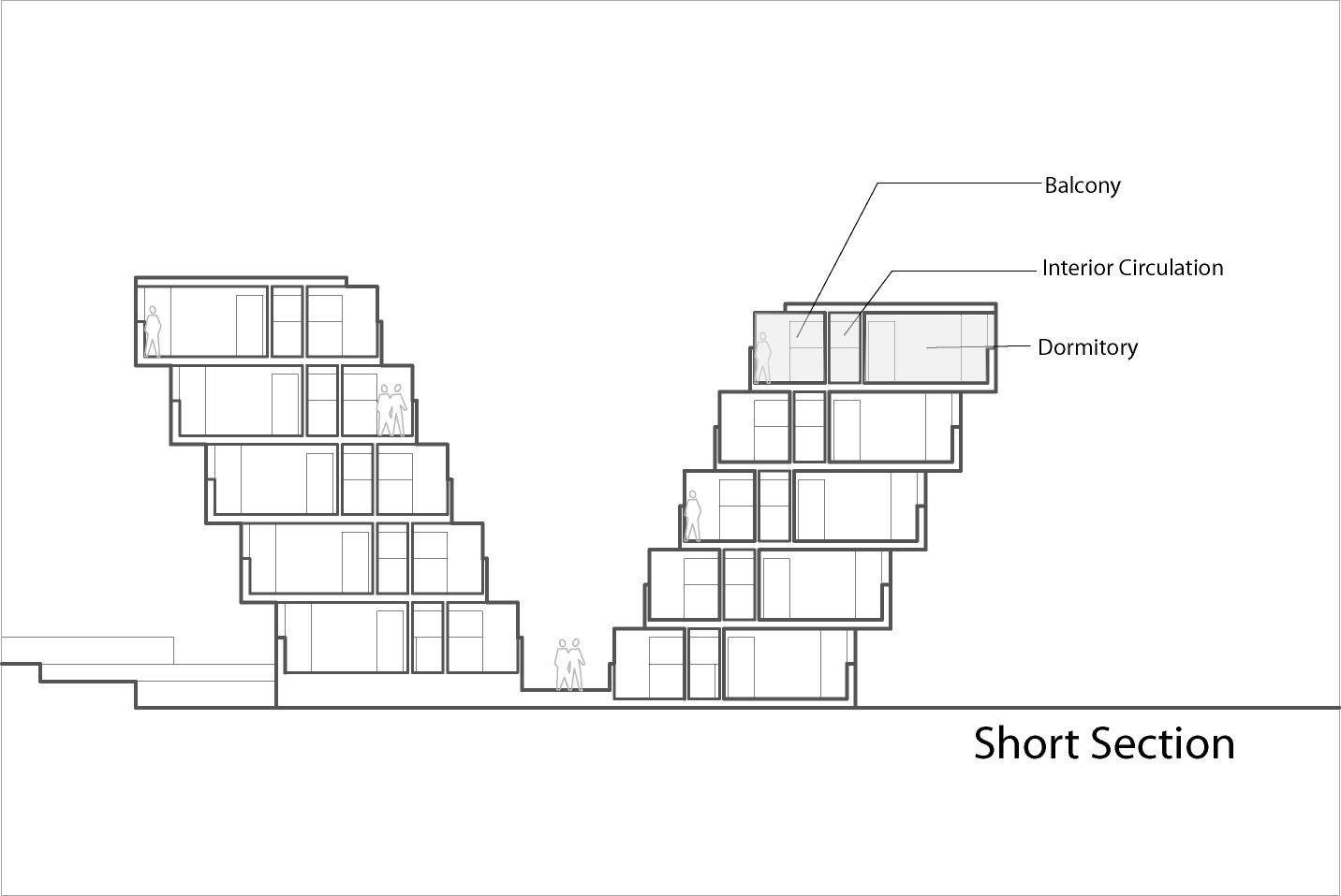
The units consists of two bedrooms, each shared by two students, with a shared bathroom and a foyer. Entry into the rooms is through the foyer from the interior circulation. From the foyer, the student can either turn left or right into his/her room, or straight into the bathroom. The bedrooms has fenestration in two sides, to allow light and views into the balcony and from the exterior. Separated by the interior circulation, the unit also has a personal public space - the balcony, from which one can view into the atrium space and interact with others.


The dormitory is basically extruded horizontally and mirrored through the site with balconies looking into each other allowing public/private interaction.


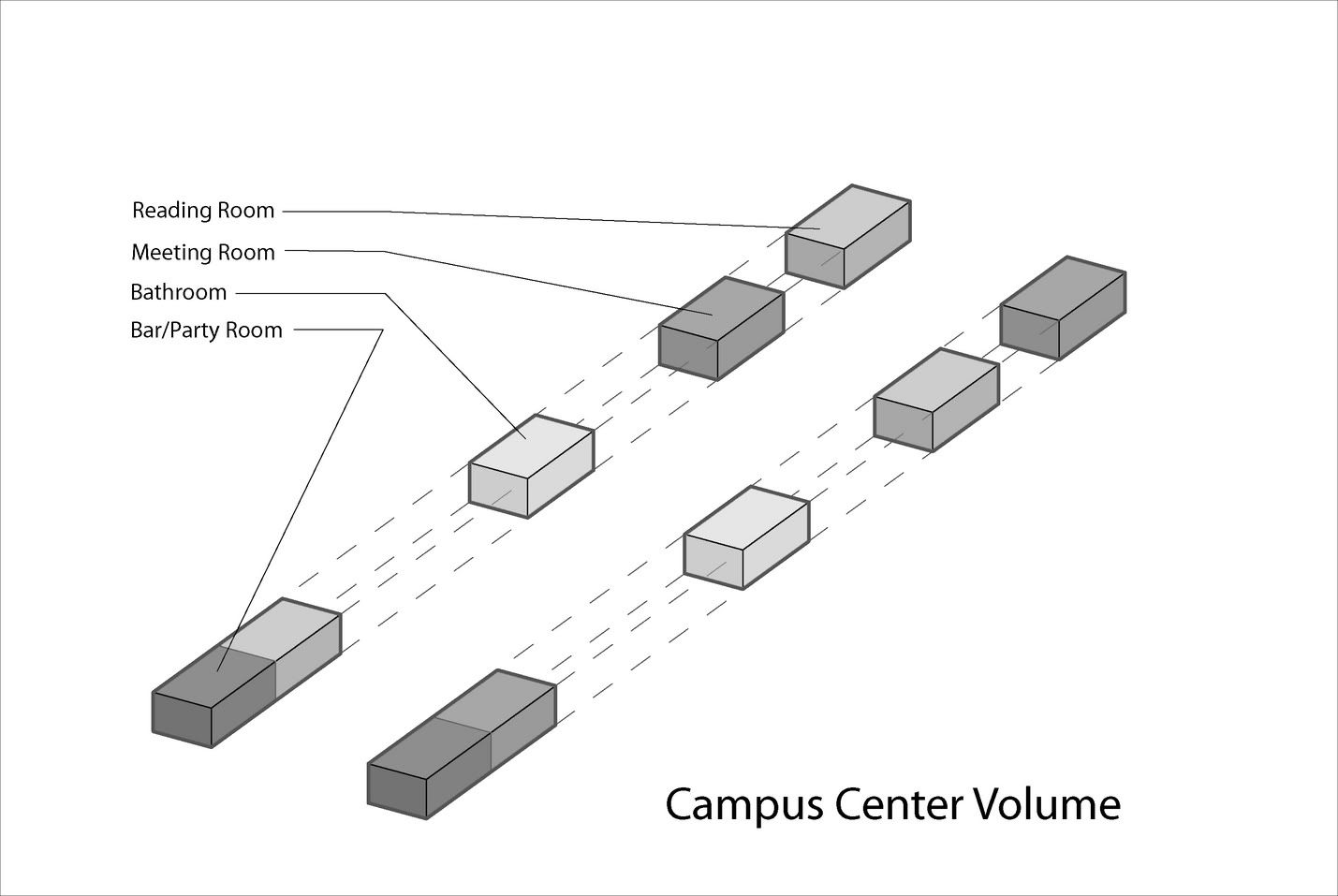
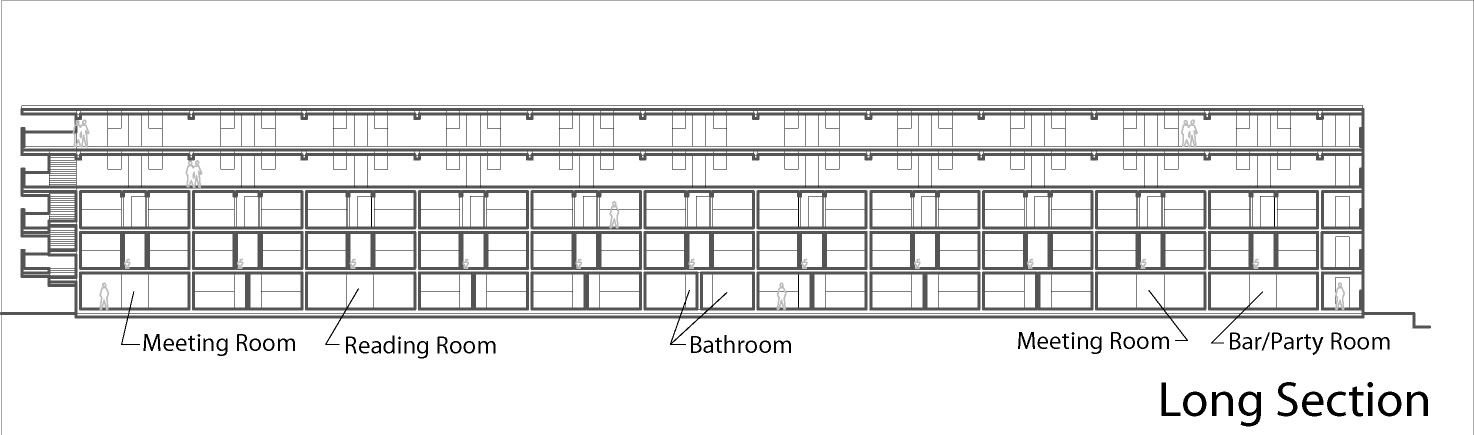
The Campus Center is engaged in the Dormitory building and dispersed along the main level. This allows the main public circulation to interact with the private spaces visually but not interfere or reduce the privacy of the dormitory. By dispersing the campus center around the length of the dormitory, I hope to encourage movement and interaction with the dormitory.


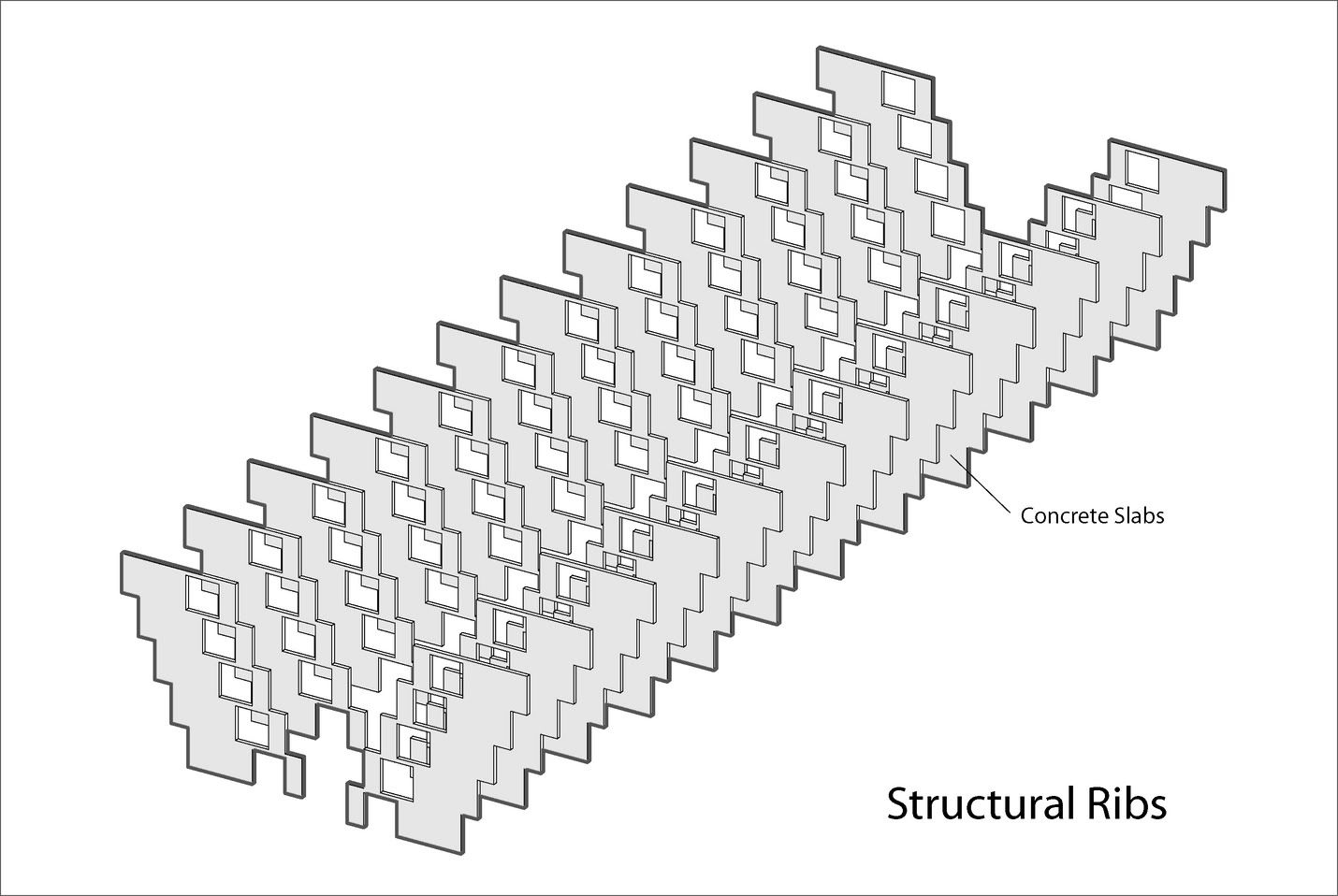
The structure of the buildings are supported by ribs concrete slabs placed between each unit.


Vertical circulation is by located on the ends of the building and between the balcony and the dormitory rooms.


The building on the site.


Plan from the 5th level.


Plan from the 1st level.


Short section, looking North.


Long Section, looking East.


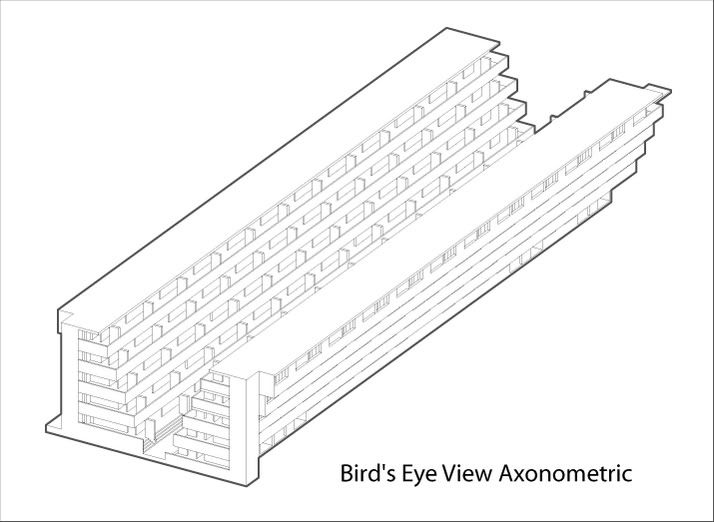
Bird's Eye View Axonometric


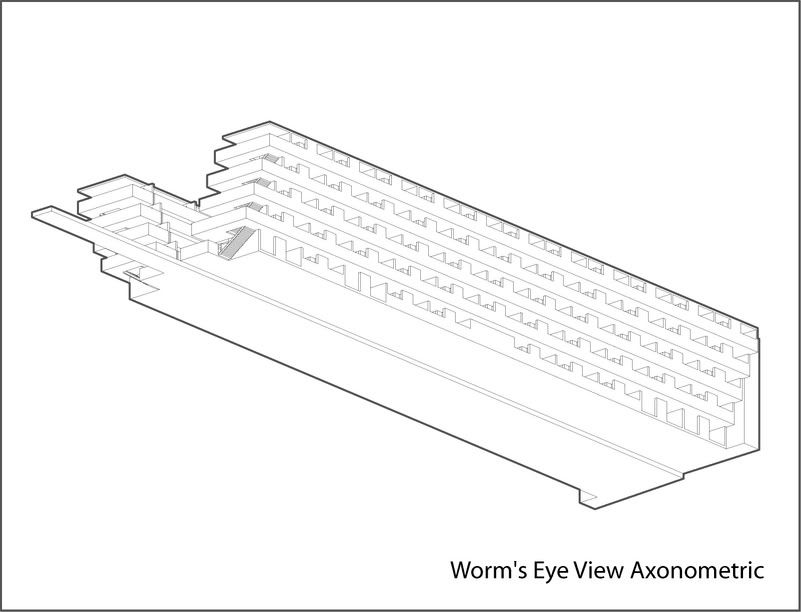
Worm's Eye View Axonometric


Exploded Axonometric of building

Critic Midreview Response:
lost of possible variations in sections in comparison to concept model,
no moments - continuous,
monolithic,
spaces all the same,
less humanistic than original concept,
need to break down more

Student Responce to Mid-Review Critique:
the atrium became more of a leftover space than a driving idea - design atrium more conciously to create more interesting public space for interaction,
became too uniform because circulation wasnt as resolved in relation to trying to have units differ in elevation in each floor,
trying to design building in smaller groups of units with vertical circualtion in between each group,
having the building more flexible with the original/existing topography